
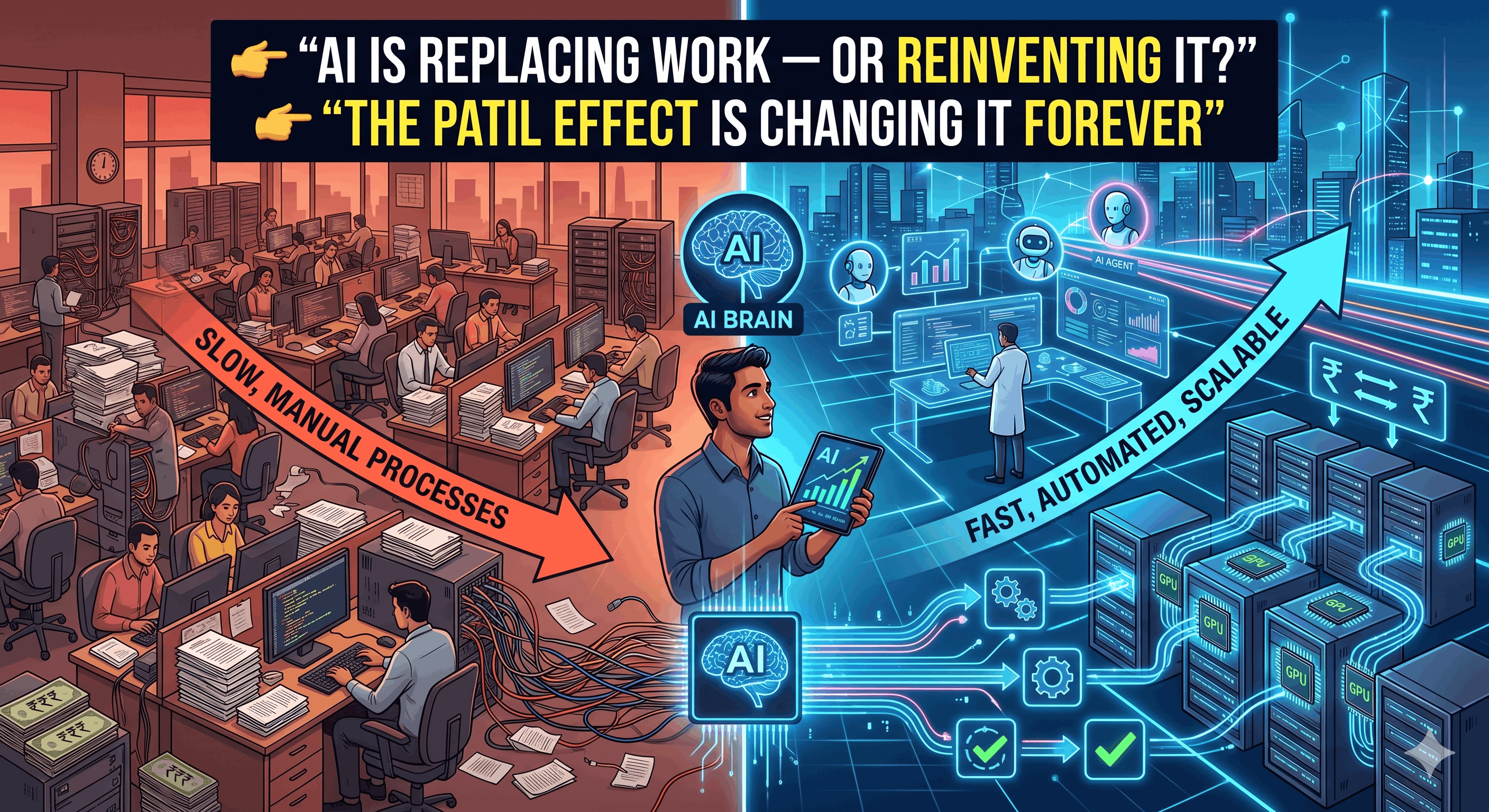
A major structural shift is happening in the global IT sector. It's not because of a new tool—but because AI infrastructure is becoming dramatically cheaper.
Analysts have started calling this shift the “Patil Effect.” It refers to how infrastructure-level optimizations in modern AI systems enable always-on enterprise automation at a fraction of previous costs.
What Is the Patil Effect?
The term describes a structural shift: AI infrastructure efficiency reducing the cost of executing complex enterprise workflows. Improvements in model serving, GPU utilization, and response latency mean that AI agents can now run continuously in production environments.
Tasks that once required large teams and long SaaS contracts can now be handled by AI-driven workflows running 24/7 at minimal cost.
Impact on Global IT Services
Traditional IT services rely on manpower-heavy maintenance and long transformation timelines. AI-driven automation compresses these timelines and reduces repetitive workloads. This creates gradual margin pressure on traditional models while increasing delivery speed expectations.
Why Indian MSMEs Win
Historically, MSMEs lacked access to enterprise automation due to high costs. Tools that once required ₹10–50 lakh budgets are now accessible through API-driven AI systems. This allows small companies to automate support, reporting, and internal workflows with precision.
Practical Use Cases:
- ✅Automated customer support response systems.
- ✅Real-time invoice and payment tracking.
- ✅Automated compliance document handling.
- ✅24/7 IT operations and server monitoring.
Strategic Direction
- 1️⃣Adopt AI internally first for productivity.
- 2️⃣Shift from manual services to AI-assisted delivery.
- 3️⃣Upskill teams in AI workflows and API integration.
Final Thought
Large enterprises adapt slowly; MSMEs can move faster. Those who begin integrating AI into daily operations today will be positioned far ahead over the next five years. The Patil Effect is a structural change in how technology services are delivered.
Start With One Process
Identify one repetitive workflow in your business and automate it today. Small wins compound fast.
🔍 Get Automation Audit