
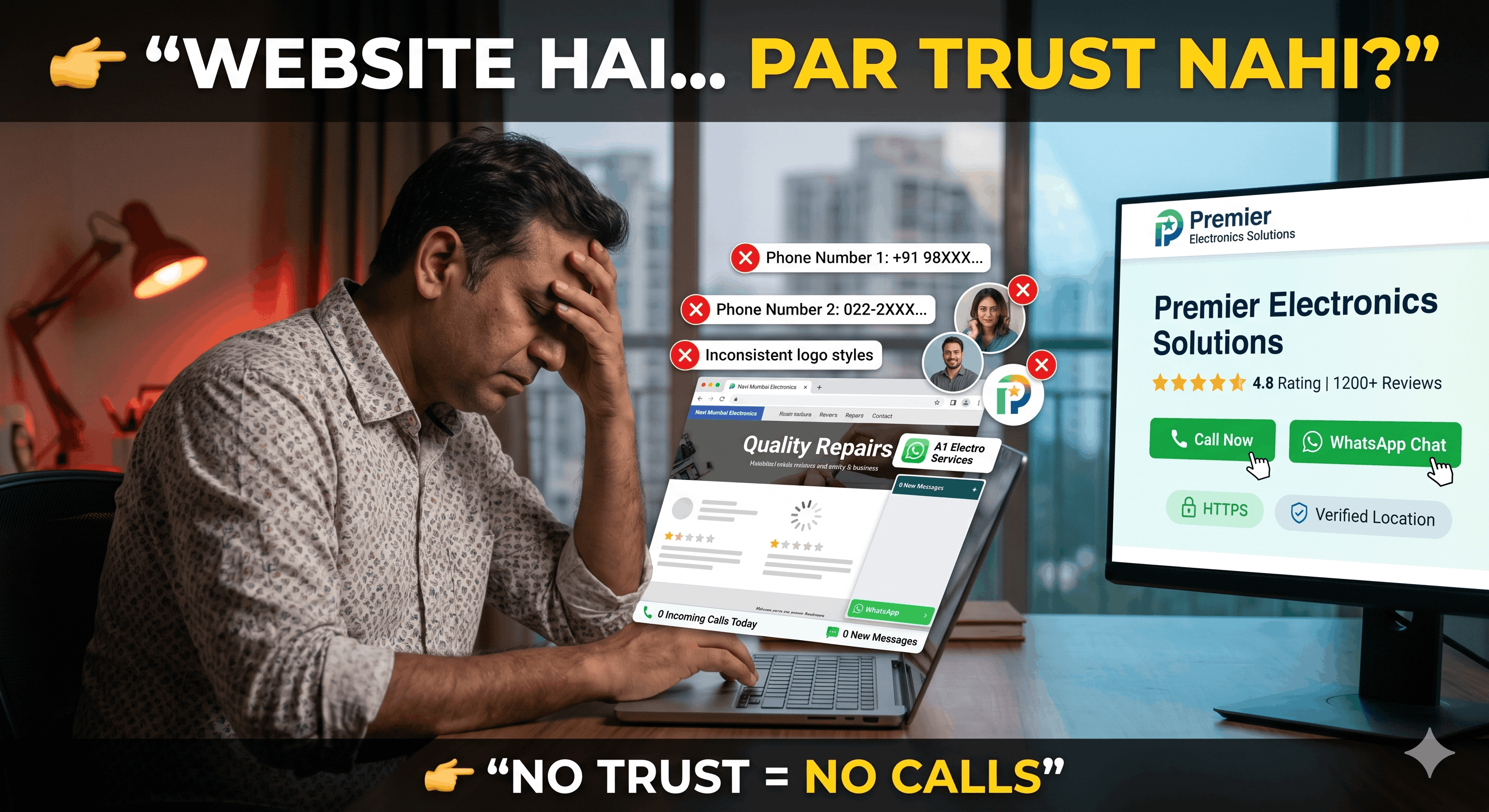
“We built the website, but we aren't getting any calls.”
I hear this every week from Indian business owners. Once the website is live, the expectation is simple: calls should start coming. But the reason for the silence isn't a lack of traffic—it is a lack of trust.
Website ≠ Trust
Having a website is a starting point, not proof of credibility. For a customer, your website must answer one specific question: “Is this business real, reliable, and safe to deal with?” If the answer isn't immediately clear, the customer simply clicks on the next Google result.
The Silent Trust Killer: Consistency Mismatch
This is where most Indian businesses fail. Imagine this scenario:
- 📌Google Maps: SaXham Technologies
- 📌Website Header: TSI Services
- 📌WhatsApp: A personal selfie profile
- 📌Phone: Different numbers on site and Google
The customer immediately wonders if this is the same business. Trust is broken in seconds. Research shows that nearly 70% of users avoid a business when contact details are inconsistent.
Aesthetic Signals That Scream “Trust”
- ✅Speed: Loads within 3 seconds on mobile.
- ✅Security: HTTPS (the lock icon) is active.
- ✅Clarity: Clear Call / WhatsApp buttons above the fold.
- ✅Realism: Real shop or team photos instead of stock images.
The India-Specific Context
Indian buyers expect clear phone numbers and familiar payment options. A bare-bones, template-based website often gives off a "scam vibe." They need to know if you are actually in their area and if someone will pick up when they call.
1-Hour Trust Audit
- 1️⃣Does the phone number match Google Maps exactly?
- 2️⃣Is the address format identical across all platforms?
- 3️⃣Is the WhatsApp button clearly visible on mobile?
- 4️⃣Do you have real photos of your workplace?
Final Truth
Getting a website live is an achievement, but keeping trust live is what generates revenue. Customers in India cross-check everything and move on without saying a word if they feel hesitant.
Losing Leads Despite Having a Site?
The problem is rarely traffic. It's usually trust gaps between your digital footprints. Let us identify them instantly.
🔍 Request a Consistency Audit