
← Back to All Articles

Digital Trust

Why Digital Trust Matters for Indian Businesses

Published on Jan 01, 2026 • By Nitin Pawar

Most Indian businesses don’t fail because of bad products or poor services. They fail because customers don’t trust what they see online.

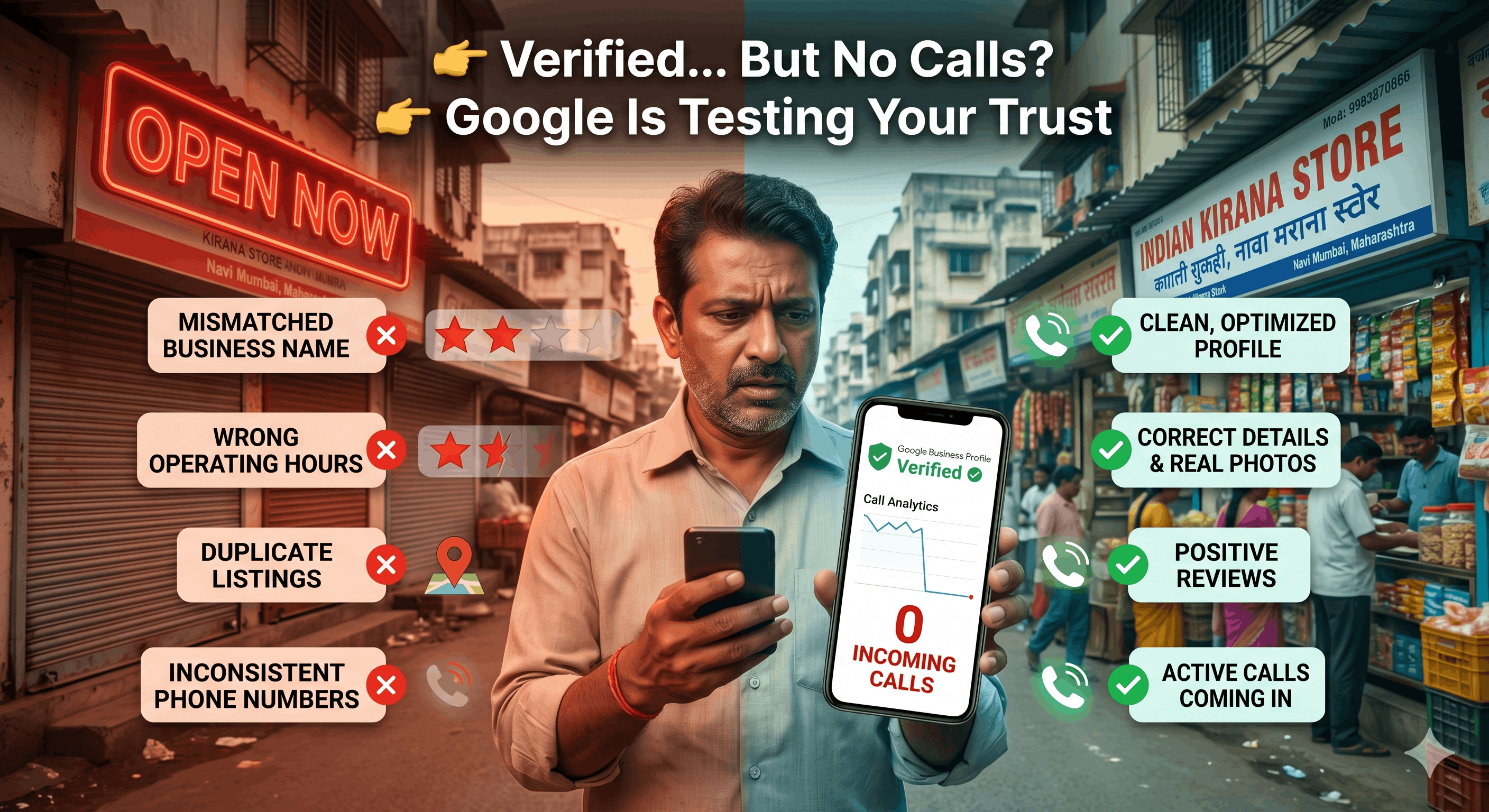
A mismatched business name, an incomplete Google Maps profile, or an outdated website — these small things quietly break trust. And once trust breaks, customers don’t complain. They simply move on to the next option.

In today’s India, digital trust decides who gets the call and who doesn’t.

Trust Is Built Before the First Call

Before a customer calls you, visits your shop, or sends a WhatsApp message, they already judge your business digitally. This usually happens in under 60 seconds.

  • They search on Google.
  • They open Google Maps.
  • They scan photos and reviews.
  • They may quickly check your website.

Only after this silent evaluation do they decide whether you are worth contacting. If something feels confusing, outdated, or fake, the decision is usually “skip.”

What Is Digital Trust (In Simple Terms)?

Digital trust is the confidence a customer has that your business is real, active, reliable, and safe to interact with.

For Indian SMBs, it is about one simple question in the customer’s mind:

“Jo online dikh raha hai, kya woh real life se match karta hai?”

If your online presence looks clean, consistent, and genuine, trust increases automatically.

Why Digital Trust Matters More in India

Indian customers are highly value-conscious and risk-aware. Research shows that lack of trust is one of the biggest reasons people hesitate to buy or contact a business.

This effect is even stronger for local services like doctors, CAs, consultants, repair shops, and brokers. People don’t “try” these businesses casually. They verify first.


3 Signals Customers Use to Judge You

1. Business Name Consistency

If your business name appears differently in different places, it creates confusion.

  • Board: SaXham Technologies
  • Google Maps: SaXham Technologies
  • Instagram: ST Services

None of this is illegal. But it feels suspicious. Clean, consistent naming across Google, website, and invoices signals legitimacy.

2. Google Maps Profile

Google Maps is the new visiting card. An untrusted profile usually shows no photos, outdated timings, or zero reviews. A trusted profile has verified status, real photos, and recent reviews. One tap is all it takes to lose a customer.

3. Website Clarity (Not Fancy Design)

Indian customers don’t expect fancy animations. They expect clarity. An outdated website with broken links sends a clear signal: “Ya toh business band hai, ya careless hai.”

A Simple 7-Day Digital Trust Fix

You don’t need months. You need focus.

  • Day 1–2 (Google Maps): Verify profile, correct name, update category, upload real photos.
  • Day 3–4 (Website): Check mobile view, list services clearly, fix HTTPS.
  • Day 5–6 (Reviews): Ask 5–10 genuine customers for reviews. Respond politely.
  • Day 7 (Audit): Check consistency across Justdial, Facebook, invoices, and cards.

Final Thought

You don’t lose customers because they didn’t like your service. You lose them because they never trusted you enough to contact you.

Build trust first. Everything else becomes easier.


Closing Thought

Digital trust is quiet. It doesn't shout like ads. But it decides who gets calls and who gets walk-ins.

👉 Struggling with Digital Trust?

If customers are ignoring you because of a confusing online presence, we can help. We audit and fix digital footprints for local businesses.

Contact Us to Build Trust

Read Next Article

Common Google Maps Mistakes →